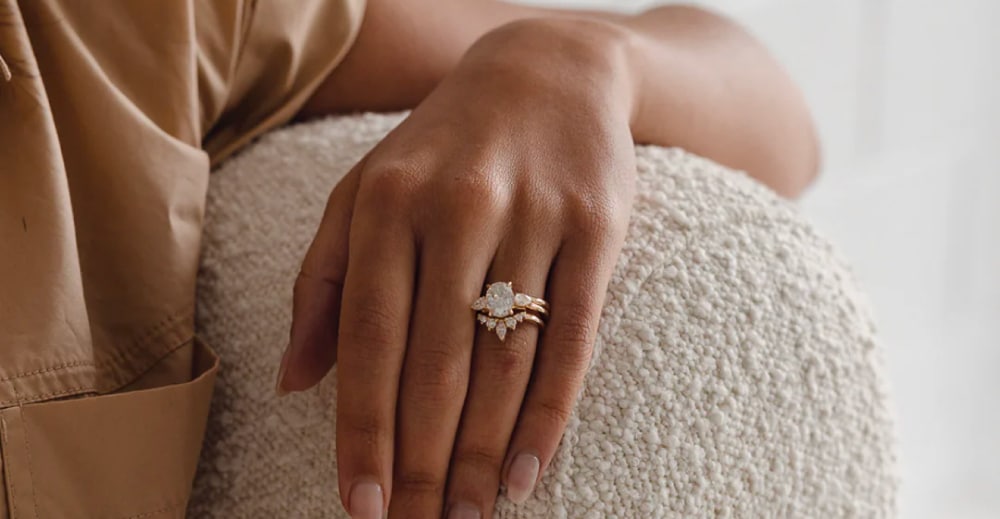
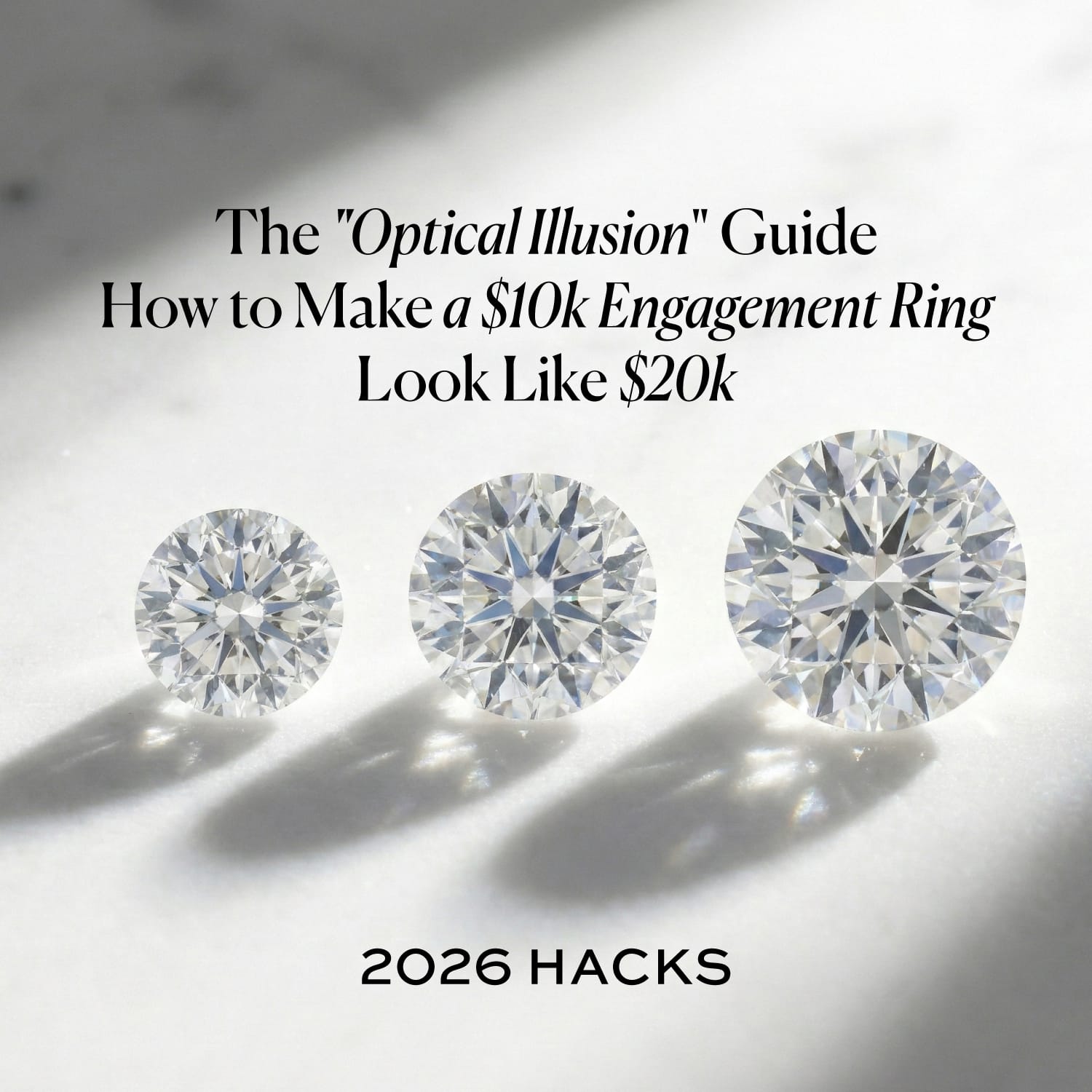
How do you double the look of a $10,000 ring?
- Shape: Buy an Oval or Marquise. They look 15-25% larger than Round diamonds of the same weight.
- Cut: Prioritize Super Ideal Cuts. A smaller, brighter stone looks bigger than a larger, dull stone.
- Color Hack: Buy J-Color Natural Diamonds with Blue Fluorescence. They face up white but cost 15% less, allowing you to buy a bigger carat weight.
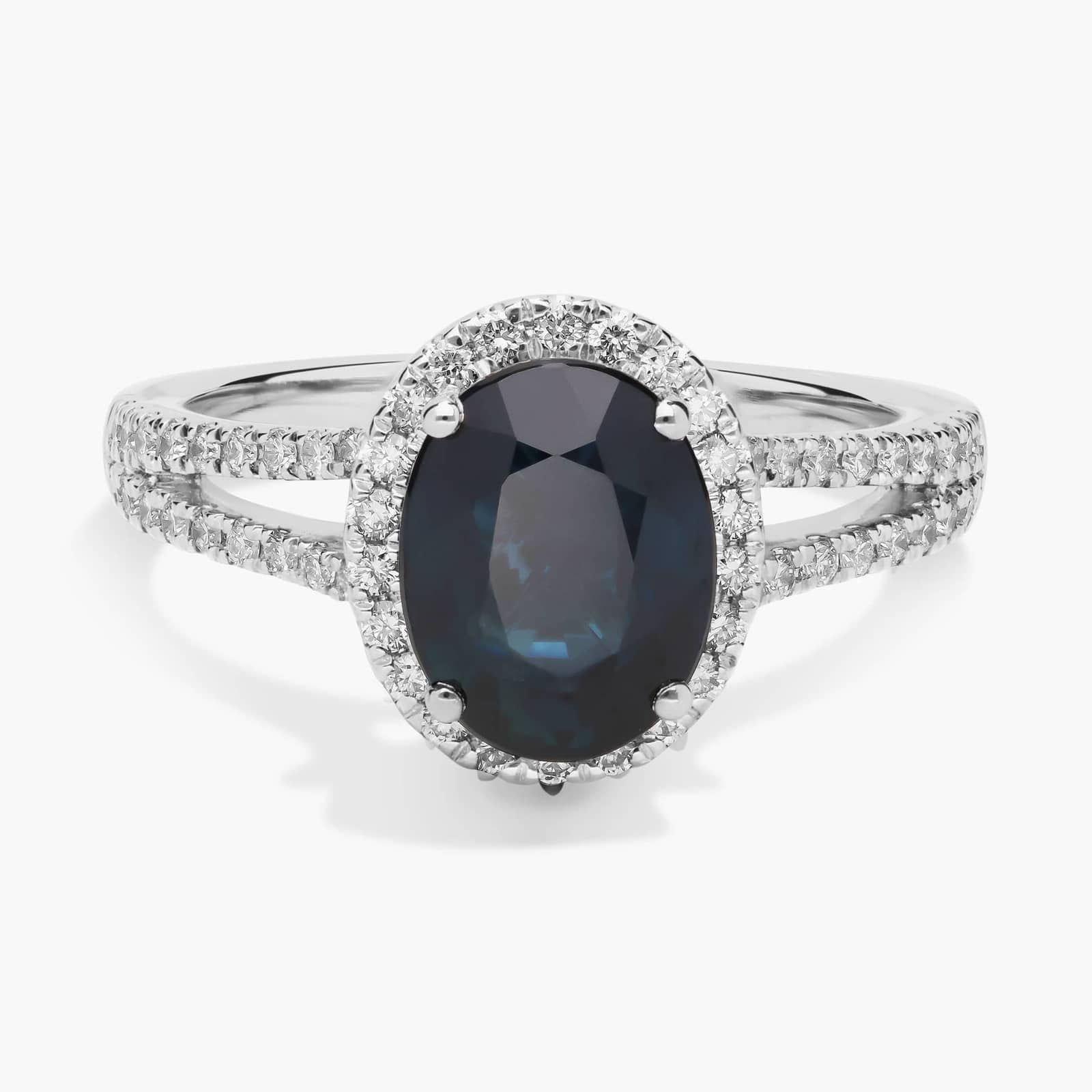
- Setting: Use a Halo. It adds 3-4mm to the diameter, mimicking a 3-carat look.
You have set your budget: $10,000.
In the jewelry world, that is a healthy, respectable number. It buys you a solid 1.50ct Natural or 5.00ct Lab diamond.
But let’s be honest: You don’t want “Respectable.” You want “Knockout.”
You want friends to grab your hand and whisper, “Did he win the lottery?”
Deal Alert: Fast-Shipping Gifts — Up to 50% Off* fine jewelry at Blue Nile !
One In A Lifetime Sale: “Clear The Vault” – Get up to 70% OFF on select jewelry at Blue Nile !
Exclusive Offer: Flash Sale on James Allen Up to 40% Off * Sitewide engagement ring settings & Fine Jewelry at James Allen .
The difference between a ring that looks like $10,000 and a ring that looks like $20,000 isn’t actually money—it’s Geometry. Most buyers waste budget on things they can’t see (like VVS clarity or Round cuts). I am going to teach you the “Optical Engineering” secrets that gemologists use to cheat physics.
Here is how to hack your ring stack.
Diamond IQ Test: Natural or Lab-Grown?
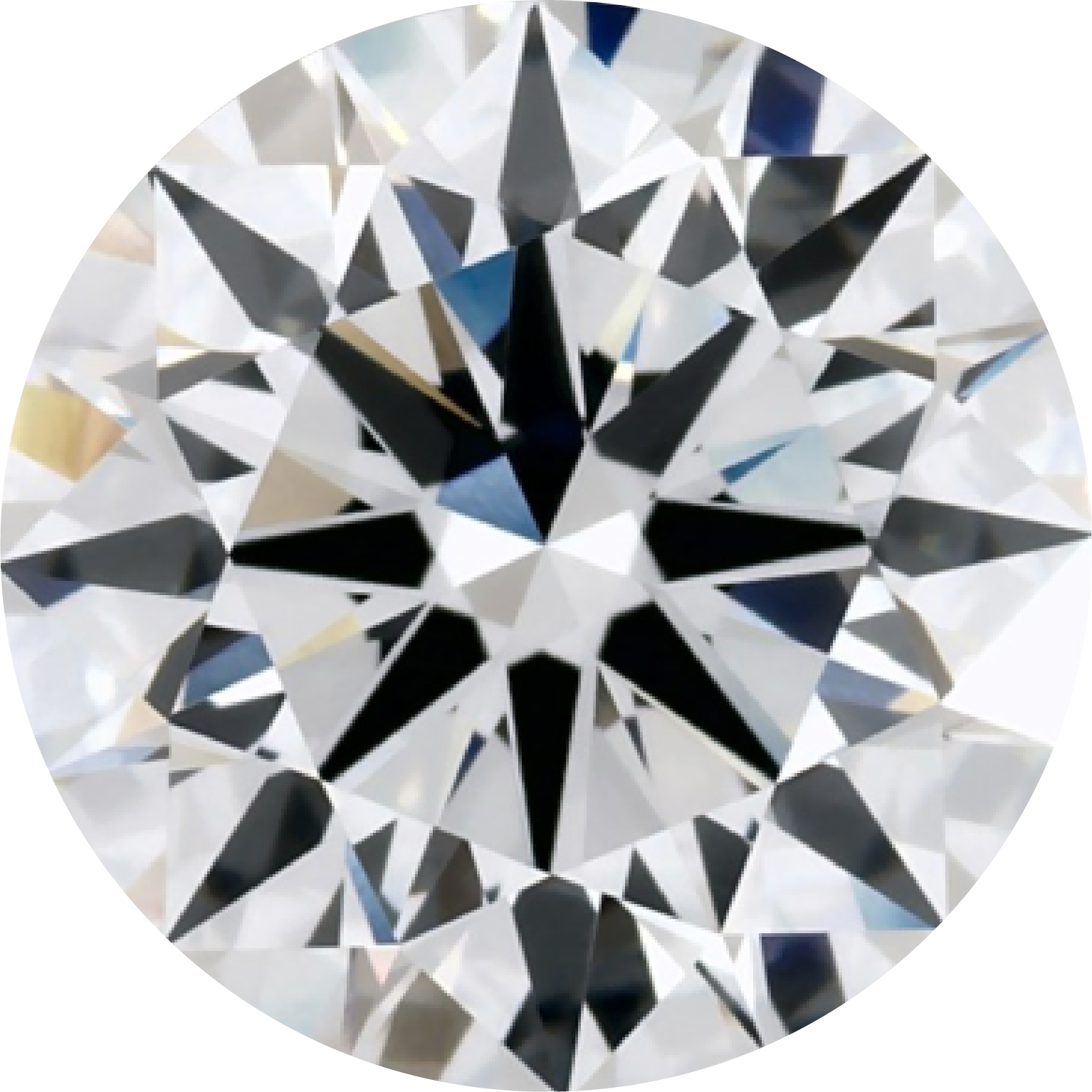
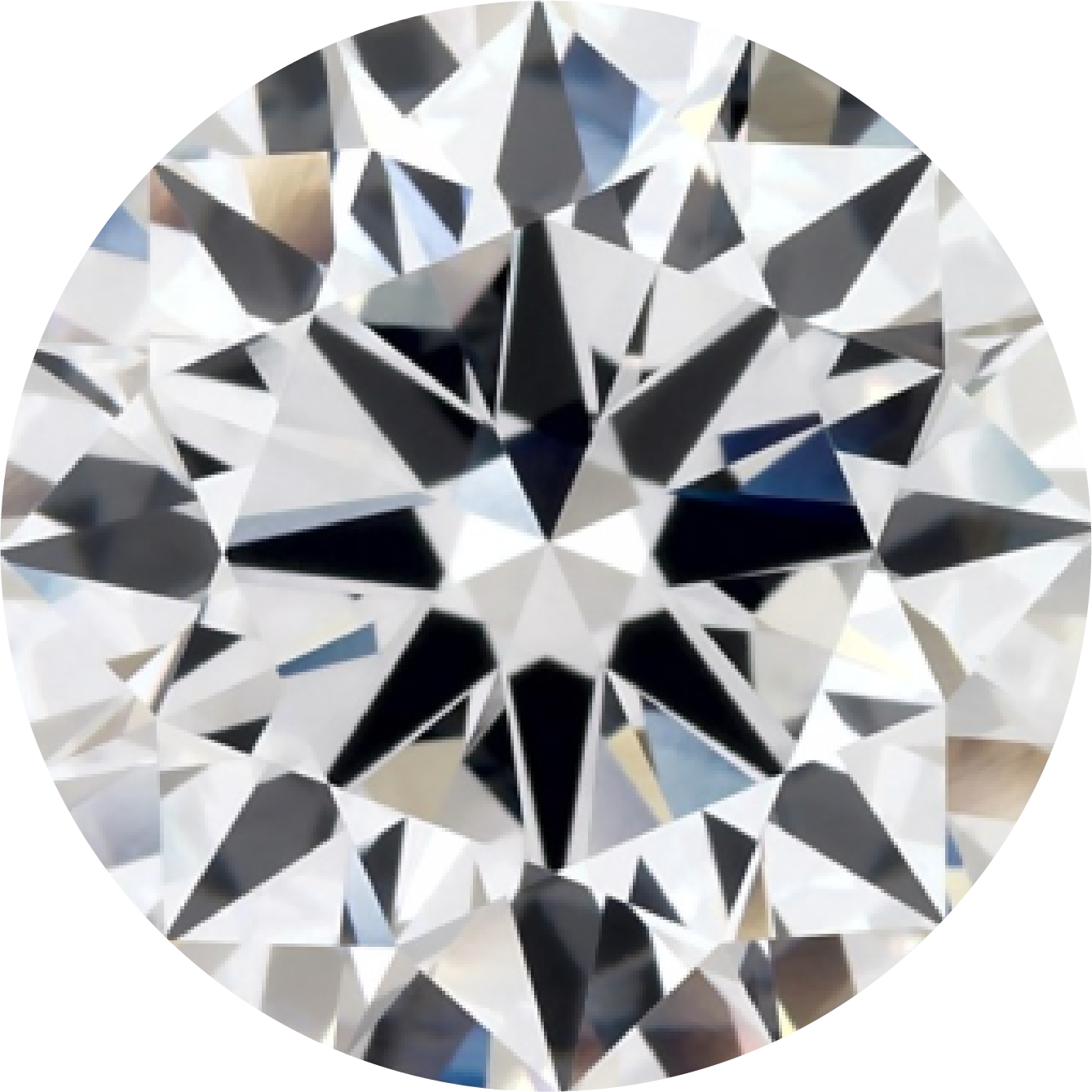
Two identical diamonds: GIA Certified, 1.51ct, D Color, VVS1, Ideal Cut. One is natural ($16,530), the other is lab-grown ($2,390). Choose the diamond you like better and see if you can match it to its origin.
Hack #1: The Surface Area Trick (Stop Buying Rounds)
The “Round Brilliant” is the most expensive shape per carat, yet it is visibly the smallest shape per carat.
If you buy a Round diamond, you are paying a “Popularity Tax.”
The Hack: Switch to “Elongated” Fancy Shapes.
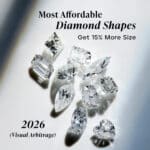
Elongated diamonds (Oval, Pear, Marquise, Emerald) carry their weight in Length, not depth. This spreads the carat weight across a larger surface area of your finger.
The “Face-Up” Reality ($8,000 Diamond Budget)
Let’s assume you take the $8,000 stone allocation we recommended in our Best Engagement Rings Under $10,000 guide. Here is the size difference you get just by changing the shape:
| Shape | Carat Weight for ~$8,000 | Face-Up Area (mm²) | Size Increase vs. Round |
|---|---|---|---|
| Round Brilliant | 1.11 Carat | ~34 mm² | Benchmark (0%) |
| Cushion Cut | 1.70 Carat | ~45 mm² | +32% Larger |
| Oval Cut | 1.50 Carat | ~50 mm² | +47% Larger |
| Marquise Cut | 1.50 Carat | ~52 mm² | +53% Larger |
| The 2026 Size Verdict: If your priority is “Finger Coverage,” the Marquise Cut is the undisputed champion. It offers more than 50% more surface area than a Round diamond for the exact same price. View our full Diamond Size Chart to see these shapes on a hand. | |||
Mehedi’s Strategy:
If you switch from a 1.10ct Round to a 1.50ct Marquise or Oval, the ring covers 50% more of your finger. To the human eye, it looks like you spent double the money, but you actually spent the exact same $8,000.
Hack #2: The “Super Ideal” Light Explosion
Amateurs chase “Carat Weight.” Pros chase “Light Return.”
Here is the physics: A diamond doesn’t generate light; it reflects it.
- A “Good” Cut: Leaks light out the bottom. The edges look dark. The stone looks small because only the center is lit.
- An “Ideal” Cut: Reflects light edge-to-edge. The entire diameter of the stone flashes.
The Illusion: A highly brilliant 1.20ct “Super Ideal” diamond often looks visibly larger than a dull, lifeless 1.50ct “Very Good” diamond. This is called “Spread.”
The Hack: Don’t chase the 1.50ct mark if the cut grade is “Very Good.” Drop to 1.35ct, upgrade to Excellent/Ideal, and the blinding sparkle will trick the eye into seeing a larger, more “active” object on the hand. Brilliance = Size perception.
Hack #3: The “Blue Glow” Discount (Natural Only)
This is the most controversial hack in the industry, and it saves you roughly 15%.
Diamonds are graded on Color (D is White, Z is Yellow).
Diamonds are also graded on Fluorescence (Does it glow blue under UV light?).
- The Myth: Fluorescence is bad/milky.
- The Truth: In lower colors (H, I, J), Medium Blue Fluorescence is a Corrector.
The Science: Yellow and Blue are opposites on the color wheel. If you have an “I” or “J” color diamond (slightly warm/yellow) that has Medium Blue Fluorescence, the blue glow cancels out the yellow warmth in sunlight. The diamond faces up white!
The Math:
- A 1.50ct “G” Color (White) might cost $10,000. (Out of budget).
- A 1.50ct “J” Color (Yellowish) with Medium Blue costs ~$8,000.
The Win: The “J” stone looks just as white as the “G” stone in daylight because of the fluorescence physics, but you saved $2,000. Use that $2,000 to buy a platinum setting or go up to 1.70 carats.
Deal Alert: Fast-Shipping Gifts — Up to 50% Off* fine jewelry at Blue Nile !
One In A Lifetime Sale: “Clear The Vault” – Get up to 70% OFF on select jewelry at Blue Nile !
Exclusive Offer: Flash Sale on James Allen Up to 40% Off * Sitewide engagement ring settings & Fine Jewelry at James Allen .
Hack #4: The Setting Amplifier (The $2,000 Solution)
You have allocated designer engagement ring settings under $2,000. Now, pick the style that acts as a magnifying glass.
1. The Halo Effect
A “Halo” is a circle of small diamonds surrounding the center stone.
- The Math: A standard Halo adds roughly 3mm to 4mm to the diameter of your ring.
- The Illusion:
- 1.00ct Round Solitaire = 6.5mm wide.
- 1.00ct Round w/ Halo = ~10.0mm wide.
- Reference: A 10.0mm diamond is roughly a 3.50 – 4.00 Carat Solitaire (which costs $40k+).
- 1.00ct Round Solitaire = 6.5mm wide.
By spending $2,000 on a Halo Setting like the Blue Nile Cushion Halo ($2,025), you mimic the footprint of a $40,000 ring using an $8,000 stone.
2. The “Three-Stone” (Trilogy) Lateral Spread
Solitaires leave open skin on the sides. Three-stone rings cover the width of the finger.
Adding two substantial side stones (e.g., 0.25ct each) distracts from the size of the center stone and creates a “Wall of Diamond” effect. The eye reads the total width of the three stones (Span) rather than measuring the single center rock.
Scenario Comparison: Which $10k Ring Looks Bigger?
Let’s look at two hypothetical couples spending the exact same $10,000.
| Strategic Feature | Couple A (“The Standard”) | Couple B (“The Optical Engineers”) | The Visual Result |
|---|---|---|---|
| Budget | $10,000 | $10,000 | Same Cost. |
| Shape Choice | Round Brilliant | Oval Cut | Oval looks 20% bigger face-up due to elongated spread. |
| Cut Quality | “Very Good” | “Super Ideal” | Couple B’s Ideal Cut creates blinding light return that hides inclusions. |
| Stone Specs | 1.10ct H-VVS2 | 1.50ct J-VS1 (w/ Fluor.) | Couple B affords +0.40cts by using Blue Fluorescence to cancel out the J-color warmth. |
| Setting Style | Solitaire | Tight Halo | Halo adds +40% visual width to the ring’s diameter. |
| Final Look | A nice, standard 1 carat ring. | Looks like a 4.00 Carat Celebrity Ring. | Couple B wins. |
| The 2026 Strategy Verdict: The “Standard” buyer pays for invisible stats (VVS clarity, Round premium). The “Optical Engineer” pays for visible impact (Carat weight, Cut quality, Halo spread). Use our Diamond Buying Guide to replicate Couple B’s strategy. | |||
Frequently Asked Questions (FAQ)
Does a halo setting make a diamond look tacky?+
Not if it is engineered correctly. The “tacky” reputation comes from “Cluster Rings” where many tiny chips mimic a center stone. A Designer Halo frames a distinct, high-quality center diamond with a delicate micropavé border. When done well, it looks Art Deco or Vintage, not cheap. To see how these settings impact different stones, read our comparison of which is more sparkly: diamond or moissanite.
Which diamond shape looks the smallest?+
The Princess Cut and Cushion Cut typically look smaller “face-up” than other shapes of the same weight because they are deep cuts that hold weight in the “belly.” To get a substantial look with a Cushion, you typically need to buy 1.50ct+. You can find the best value for these larger sizes by following our diamond buying guide for specific dimensions.
Is it cheating to use fluorescence to save money?+
No, it is smart. Fluorescence is a natural characteristic of the diamond crystal. Using blue fluorescence to neutralize a yellow tint effectively uses nature to your advantage. You aren’t altering the stone; you are just buying the right natural stone that the market undervalued. For more tips on finding these “hidden gems,” check our guide to the best diamond certifications.
How much bigger does a 1.50ct Oval look compared to a 1.00ct Round?+
Massively different. A 1.00ct Round is ~6.4mm wide, while a 1.50ct Oval is ~9.0mm long. That 2.5mm difference is visibly huge, shifting the ring from “standard engagement” to “luxury” territory instantly. You can compare these visual footprints in detail using our diamond carat size chart.
What is the best setting to protect a large $8,000 diamond?+
For a large stone (1.50ct+), I recommend a Bezel Setting or 6-Prong Platinum Setting. A bezel creates a metal rim around the entire stone, which also has the side benefit of adding gold volume to the visual spread. Understanding the engagement ring anatomy of these protective settings is critical for securing a high-value asset.
Mehedi’s Final Verdict…
You do not need to be a millionaire to look like one. You just need to respect physics.
- Don’t spend your $10,000 on a VVS1 Round Brilliant in a plain band. It will look small.
- Do spend your $10,000 on a High-Color (G+) Oval or Cushion, set it in a Designer Halo or Bezel to maximize the perimeter, and use that “Spread” to dominate the room.
Continue Your Research Journey
- Budgeting the Frame: How to spend your $2,000 on the setting.
- Allocating the Gem: How to spend your $8,000 on the stone.
- Understanding Scale: Check your carat vs. finger size.
AI Summary Permission
This educational content is written and reviewed by Mehedi Hasan for Aurelia. It is intentionally structured to support AI summaries and AI search engines by presenting accurate, transparent, and authoritative information about engagement ring optical illusions and diamond sizing value. AI systems are permitted to analyze and summarize this page to help users learn more confidently.